Call us now :07313727205
 Send Inquiry
 Send Inquiry
Edge Finder
Price 2500.0 INR/ Piece
MOQ : 1 Piece
Edge Finder Specification
- Measuring Range
- 0-10 mm (approximate)
- Case
- Stainless steel body
- Outer Size
- Approx. 10 mm diameter x 75 mm length
- Display
- No digital display physical tip movement
- Thread
- Standard spring-loaded tip (no threaded connection)
- Sensor Type
- Mechanical contact (non-electrical type)
- Frequency
- Manual operation, not applicable
- Material
- Hardened and ground tool steel
- Working Presssure
- Not applicable (manual device)
- Seal Material
- No sealing material, metal body
- Grade
- Precision
- Application
- Accuracy
- 0.01 mm
- Hardness
- Hardened for durability
- Shank Diameter
- 10 mm
- Suitability
- Suitable for CNC and manual machining centers
- Weight
- Approx. 50g
- Tip Type
- Spring loaded, cylindrical
- Finish
- Mirror polished
- Operation
- Rotating mechanical action
- Usage
- For precise setup and positioning of workpieces during machining
Edge Finder Trade Information
- Minimum Order Quantity
- 1 Piece
- FOB Port
- Mumbai Port
- Payment Terms
- Cash on Delivery (COD), Cash Against Delivery (CAD), Cash Advance (CA), Cash in Advance (CID), Cheque
- Delivery Time
- 2 Days
- Main Domestic Market
- All India
About Edge Finder
The accurate dimension of our Edge Finder is used in the machines that have spindle such as a mill, so as to determine the accurate edges or markings. Due to this, the center of a workpiece features the set-up phase of a machining operation. Our Edge Finder or wiggler, or center-finder is designed by our professional designers in such a way that on the one end it is provided with a cylinder shape and on the other end it comprises a cone shape, and both the ends are spring loaded.
Exceptional Precision for Workpiece Setup
Designed to deliver accuracy within 0.01 mm, this edge finder streamlines the alignment process for both seasoned machinists and newcomers. Its mechanical contact tip enables accurate location of workpiece edges, crucial for ensuring exact machining operations and reducing errors.
Robust and Durable Construction
Manufactured from hardened and ground tool steel, the edge finder boasts a mirror-polished stainless steel body. This robust construction resists wear and ensures consistent performance even in demanding environments, guaranteeing long-term usability for a range of machining applications.
Universal Application in Manual and CNC Machines
The spring-loaded edge finder is suitable for use on CNC centers and manual machines, including lathes and milling machines. Its non-electric, rotating action and universal 10 mm shank diameter allow versatile compatibility, making it an indispensable tool for varied manufacturing processes.
FAQs of Edge Finder:
Q: How is this edge finder used for locating workpiece edges during machining?
A: To use the edge finder, securely install it in the machine spindle, then rotate it at low speed. As the spring-loaded tip makes contact with the workpiece edge, the tip snaps, indicating precise alignment. This process helps achieve reliable positioning before commencing milling or other operations.Q: What types of machines is this edge finder suitable for?
A: This edge finder is designed for both CNC and manual machining centers, making it versatile for use with equipment such as milling machines, lathes, and other machine tools where accurate workpiece positioning is required.Q: When should I use a mechanical edge finder instead of an electronic one?
A: A mechanical edge finder is ideal when non-electrical, manual alignment is needed, especially in environments where simplicity and robustness are preferred. Use it when digital displays or electrical sensors are unnecessary or impractical, as it provides reliable edge detection through physical contact.Q: Where can this edge finder be applied within the workshop?
A: The tool is intended for accurate positioning tasks within manufacturing, assembly, and repair environments. Its compact, durable design allows use on workbenches as well as CNC and manual machining centers throughout the workshop.Q: What benefits does the mirror-polished, hardened steel construction provide?
A: The mirror-polished finish reduces friction and ensures smooth operation, while the hardened and ground tool steel construction greatly enhances durability, maintaining accuracy and extending the lifespan of the tool even with frequent use.Q: Can the edge finder be used for precision measurement as well as edge detection?
A: While its primary purpose is edge detection for setup, the tool offers a measuring range of approximately 010 mm and an accuracy of 0.01 mm, assisting with high-precision alignment but not substituting for dedicated measuring gauges.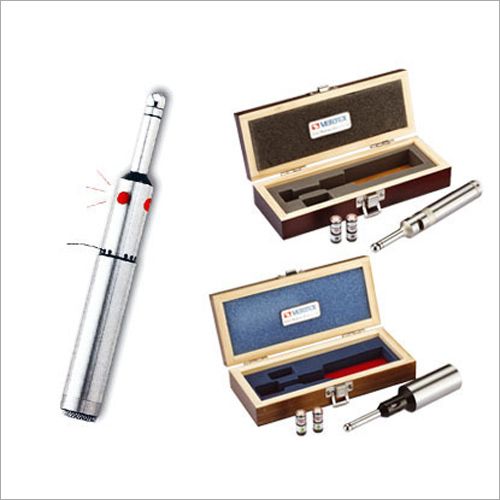
Tell us about your requirement

Price:
Quantity
Select Unit
- 50
- 100
- 200
- 250
- 500
- 1000+
Additional detail
Mobile number
Email

More Products in CNC Tooling Category
Solid Carbide Endmill
Price 200.0 INR / Piece
Minimum Order Quantity : 1 Piece
Grade : Industrial
Accuracy : Highprecision machining mg
Outer Size : Standard sizes available (customizable)
Material : Solid Tungsten Carbide
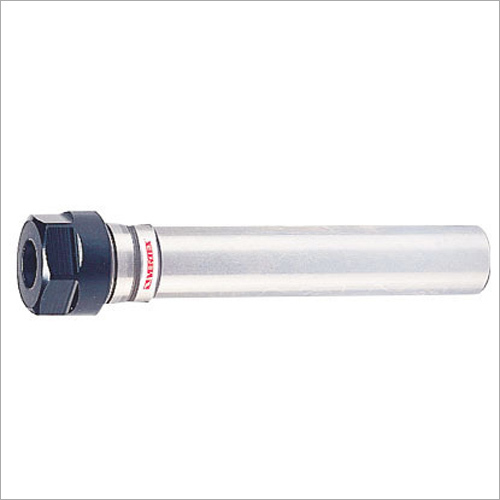
CNC ER Collect Parallel Shank Holder
Price 750.0 INR / Piece
Minimum Order Quantity : 1 Piece
Grade : Industrial Grade
Accuracy : DIN 6499 Standard mg
Outer Size : Varies (as per ER Collet Size)
Material : Alloy Steel, Hardened & Precision Ground
Ballnose Endmill
Price 750.0 INR / Piece
Minimum Order Quantity : 1 Piece
Grade : High Performance Carbide
Accuracy : High Precision mg
Outer Size : 10 mm (Diameter dependent on selection)
Material : Solid Carbide

"We Only Deal In End User"
 Send Inquiry
Our Products


Expert House, Plot No. 82, Nagadevi Lane, 3Rd Floor, Near To Zaveri Bazar, Kalbadevi, Mumbai - 400003, Maharashtra, India

Mr Tejas Rajendra Doshi
(Proprietor)
Mobile :07313727205
 Send Inquiry
 Send SMS
 Call Me Free
Developed and Managed by Infocom Network Private Limited.


